A recent study published in Circulation suggests that clinical testing of kids who are first degree family members of HCM patients (i.e. siblings and children of those who have already been diagnosed with HCM) could be improved by starting testing at a younger age. And, genetic testing should further improve diagnosis and treatment for this group.
Author: hcmbeat
How a Louis L’Amour Book about the Southwest Inspired a HCM Discovery
When Stanford biochemist Jim Spudich settled down in bed with a book recommended by his wife, he had no idea that the book would inspire one of the biggest discoveries of his career. Spudich drifted off to sleep while reading The Haunted Mesa, a science fiction novel by Louis L’Amour. His scientific discovery was based on an image he saw in his dreams when the image of a mesa morphed into a myosin molecule.
Continue reading “How a Louis L’Amour Book about the Southwest Inspired a HCM Discovery”
Hackers and ICDs: What to Know About Today’s Medtronic Warning
Today, it was announced by the U.S. Department of Homeland Security that 750,000 implantable defibrillators manufactured by Medtronic could potentially be vulnerable to hacking.
Continue reading “Hackers and ICDs: What to Know About Today’s Medtronic Warning”
MyoKardia Announces Positive Result for Mavacamten for Treatment of HOCM
Are Your Genetic Test Results Valid?
A recent study by several HCM genetics researchers around the globe, led by Australia’s Dr. Jodie Ingles, found that 2/3 of genetic mutations previously reported to patients as HCM causative may actually NOT trigger HCM.
The High Hanging Fruit: Treatment for Non-Obstructive HCM – Commentary by Dr. Sharlene Day
Unfortunately, this study which was conducted by Dr. Perry Elliott and his colleagues at University College London, found that trimetatazidine did not improve exercise capacity in these patients. Following the results of this study, trimetazidine will now join ranolazine and spironolactone in the compost heap of drugs which tried and failed to improve HCM symptoms. While a third drug, perhexiline, was found to improve symptoms for non-obstructive HCM, its limitations, including potentially serious side effects, stand in the way of its common usage.
Visiting Mayo Clinic
I had open heart surgery (a septal myectomy) to treat my hypertrophic cardiomyopathy in 2006. I went back to Mayo twice for the two years following the surgery, but after that I hadn’t felt the need to return since I was regularly following up with my local cardiologist. In April of 2018, it had been almost ten years since I had been back to Rochester. So, I decided it was time to take a trip and make sure that all was in order.
Simple Lifestyle Changes Can Improve HCM Symptoms
This article by Dr. Stephen Heitner of Oregon Health & Science University covers some simple lifestyle changes that can help HCM patients feel much better. In particular, Dr. Heitner mentions:
- Eating smaller meals and avoiding large carbohydrate rich meals.
- Avoiding dehydration
- Limiting alcohol
- Avoiding exercise after eating
- Engaging in moderate intensity exercise
- Managing weight
- Evaluating and treating sleep apnea and other sleep breathing disorders
- Getting appropriate treatment for anxiety and depression
The above lifestyle changes, combined with appropriate medical treatment, will keep HCM patients feeling their best.
The Evolution of HCM: A Historical Perspective
This article, by Drs. Julio Panza and Srihari Naidu of New York’s Westchester Medical Center, describes early efforts to diagnose, categorize and treat hypertrophic cardiomyopathy, while explaining how these methods have evolved over time. A very interesting and informative read.
Apple Watch Spots AFib
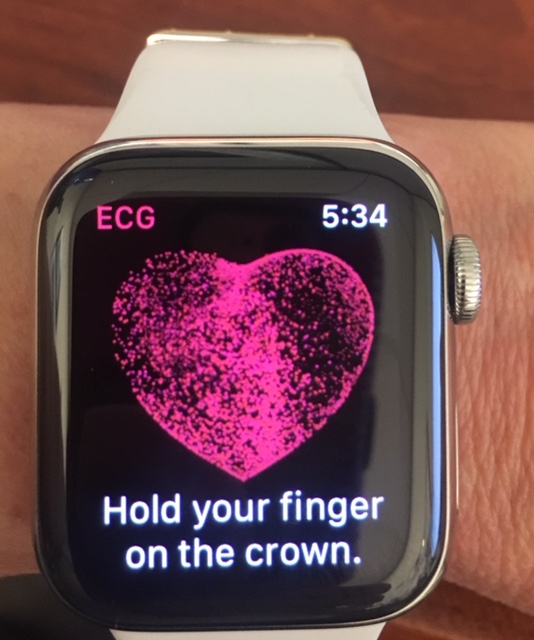
The software update which allows the Apple Watch 4 to take an EKG and to detect atrial fibrillation went live last week. In anticipation of the availability of these functions, I purchased an Apple Watch 4. As soon as the software was available, I downloaded it and have used it every day since. So far, I am quite pleased with my purchase. The technology works very well, even despite the fact that I have an implantable pacemaker/defibrillator.
The strip it takes looks like this:

You can send a strip via email to your doctor, and all are saved for posterity on your Iphone. (NOTE: YOU MUST HAVE AN IPHONE CAPABLE OF RUNNING THE SOFTWARE IN ORDER TO USE THE WATCH).
And, as long as you tell the software that you have never been diagnosed with atrial fibrillation, if it detects atrial fibrillation while you wearing the watch, it will send you an alert. I haven’t gotten such an alert yet and hope not to!
This article provides a pretty accurate history of handheld consumer EKG devices along with a description of what it is like to download and use the Apple software.
And here is a story about a man whose watch spotted his previously undiagnosed Afib. After a trip to the emergency room, he was able to receive proper treatment and avert a potential health crisis.