2024 Updated Guidelines for Management and Treatment of HCM

The American Heart Association/American College of Cardiology (AHA/ACC) Guidelines for the Diagnosis and Treatment of Hypertrophic Cardiomyopathy published in 2020 have been updated for 2024 to address certain new developments in the field including the addition of myosin inhibitor such as Camzyos (mavacamten) to the treatment arsenal, as well as the benefits of exercise for the HCM population.

The 2024 guidelines update the most recent version published in 2020.  In the past,  guidelines were only updated every decade or so, but with the recognition of major changes in the treatment of HCM with the addition of new drugs such as mavacamten, AHA/ACC wants to keep the guidelines current with emerging developments.  Guidelines are compiled following review and discussion by a committee of HCM experts with reference to the latest published HCM literature.  The document addresses the broad spectrum of issues seen by medical professionals who are called upon to diagnose and treat patients and families affected by hypertrophic cardiomyopathy.

Two patients served on the writing committee for this 2024 update:  Cynthia Burstein Waldman, a HCM patient who is the Founder and Editor of the blog HCMBeat was privileged to sit on the writing committee alongside congenital heart patient and 2020 guidelines committee member Lauren Evanovich and the esteemed panel of medical professionals. Together the committee members discussed the latest research and determined best practices for addressing all facets of HCM.  The inclusion of patients on the committee provides a real world perspective focusing the discussion through the lens and experience of people who have actually lived through and dealt with these and similar medical issues. Lauren and I hope and believe that our input was useful and we are grateful to have played a small part in moving things forward for HCM patients.

Some key updates to the 2024 guidelines include:

  • New Drug Options:  Cardiac myosin inhibitors such as Bristol Myers Squibb’s mavacamten (Camzyos) are now an option to treat patients with obstructive HCM who do not see improvement to their symptoms from first line drug treatments like beta blockers and calcium channel blockers.
  • Exercise:  Exercise is beneficial to patients with HCM and has not been associated with increased risk of ventricular arrhythmias as previously feared and reflected in prior guidelines which urged caution with regard to exercise. Current research reflects the cardiovascular benefit to all, including HCM patients, of moderate exercise.  However, it is critical to seek input from HCM experts and engage in shared decision making about the risks and benefits of exercise before undertaking an exercise program. This discussion should be repeated at regular intervals.
  • Shared Decision Making:  The 2020 and 2024 guidelines emphasize the process of shared decision-making between patients and medical providers.  Medical providers should provide an overview of all testing and treatment options, and engage the patient in a complete discussion of all risks and benefits.  Most importantly, the patient is encouraged to share their own goals, values, and concerns which should inform the final decision.
  • Referral to HCM Specialty Centers Encouraged:  Referral to specialized HCM Centers with expertise in treatment of the disease is important.  Expert advice is especially important where the treatment path is not clearly defined, or for HCM specific procedures and complex treatment and lifestyle decisions.
  • Atrial Fibrillation:  HCM patients with atrial fibrillation, whether it is persistent or paroxysmal (sporadic), have a heightened risk of stroke. Therefore, there should be a low threshold for prescribing anti-coagulant drugs for HCM patients with AFib without regard to traditional stroke risk scoring systems, i.e. the CHADS-VASc score.  Maintenance of sinus rhythm and rate control are key treatment goals.

For key patient takeaway messages from the guidelines click HERE.

For a complete look at the guidelines click HERE.

For a video of the Writing Committee Chair Dr. Steve Ommen and Co-Chair Dr. Carolyn Ho talking about the new guidelines, as well as other and related resources, click HERE.

Damar Hamlin’s Cardiac Arrest Should Move America to Action

Sudden cardiac arrest (SCA) has had a moment in the public eye this week.  The NFL game between the Cincinnati Bengals and Buffalo Bills, which was postponed after Bills safety Damar Hamlin suffered a cardiac arrest and collapsed on the field, was, according to CNN, the most-watched “Monday Night Football” telecast in ESPN history, averaging 23.8 million viewers.  

Damar Hamlin’s misfortune shined a public light on the grim reality that we as HCM patients live with every day:  the possibility we could suffer SCA at any moment without warning.

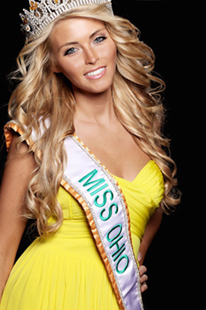
HCMBeat has written before about fellow HCM patient Lindsay Davis, who uses her platform as a former Miss Ohio to effect positive change for those with heart issues.

Lindsay pic 2022

In fact, Lindsay successfully lobbied for what is now known as “Lindsay’s Law,” which educates coaches, parents and athletes on the signs and symptoms of an underlying heart condition and removes a child with symptoms of heart disease from play until cleared by a cardiologist.

Now Lindsay has taken the opportunity to write a compelling op-ed for Newsweek about the need for cardiopulmonary resuscitation (CPR) and automatic external defibrillator (AED) training in the community. As Lindsay correctly points out, Damar Hamlin suffered a cardiac arrest in a NFL stadium surrounded by trainers, medical personnel and the most up to date equipment.  Children who play sports do not have the same  advantages. If a similar situation occurred on a school baseball diamond or a playground basketball court, it is likely that the bystanders would not be so prepared to render aid.

Some of you may know that I have been a lifelong fan of the New Orleans Saints football team. Gayle Benson, the owner of the Saints and the Pelicans, the local NBA team, did something that I hope will serve to inspire other professional teams to do for their communities. Mrs. Benson reached out and, finding there was a need, donated a total of 67 AEDs to the New Orleans Recreation Department (NORD) and the neighboring Jefferson Parish Recreation Department (JPRD).  Mrs. Benson will also provide CPR and AED training to NORD and JPRD personnel so they know what to do in the event of a cardiac arrest at their facilities.

Time is key when a person suffers a cardiac arrest.  According to the American Heart Association (AHA), 350,000 cases of cardiac arrest occur each year outside of a hospital, and the survival rate is less than 12 percent. CPR can double or triple the chances of survival.

A 2018 study highlighted on the AHA website shows the great benefit of being resuscitated by an AED following a cardiac arrest.  Read the following statistics:

  • Cardiac arrest victims who received a shock from a publicly-available AED had far greater chances of survival and being discharged from the hospital than those who did not; 66.5 percent versus 43 percent.
  • Cardiac arrest victims who received a shock from a bystander using a publicly-available AED had 2.62 times higher odds of survival to hospital discharge and 2.73 times better outcomes compared to victims who received their first  AED shock from emergency responders.
  • Victims who received an AED shock from a bystander (57.1 percent) using a publicly-available device instead of having to wait for emergency responders (32.7 percent) had near normal function and better outcomes.
  • Without a bystander using AED shock therapy, 70 percent of cardiac arrest patients either died or survived with impaired brain function (emphasis added).

More information about the chain of survival can be found on the American Heart Association website.

If you are looking for a New Year’s Resolution (or even if you aren’t!) take the time to learn CPR and learn how to use an AED today.  AEDs are so simple to use that even a 5th grader can administer properly.

And here is short video from Mayo Clinic showing how to do hands-only CPR.

And if you are a heart patient, think about getting an AED for your home.  I myself have one in my dining room.

AED dining room

Finally, I am sending out my best personal wishes to Damar Hamlin for a complete recovery. (As of this writing, he appears to be well on his way.)  

Most of all, I am sending out my sincere hope that this disturbing incident will improve the chances that the next person who suffers cardiac arrest will be lucky enough to be in the right place at the right time for complete resuscitation.

Wishing the entire HCM community a happy, and most of all a healthy, New Year. 

Cynthia Burstein Waldman  © 2023

All views expressed herein are my own.

HCM News from 2021 AHA Scientific Sessions

This year at the AHA Scientific Sessions several presentations focused on HCM.  A couple receiving attention included:

2020 AHA/ACC HCM Diagnosis & Treatment Guidelines Released – Updated With New Links

The highly anticipated 2020 American Heart Association/American College of Cardiology Guidelines for the Diagnosis and Treatment of Patients with Hypertrophic Cardiomyopathy have been released.

This document, drafted with reference to published HCM literature, and with input from a committee of HCM experts with broad expertise, updates the prior version published in 2011.  It contains clinical practice guidelines for the broad spectrum of issues which may confront medical professionals as they approach the diagnosis and treatment of patients and families affected by hypertrophic cardiomyopathy.

Continue reading “2020 AHA/ACC HCM Diagnosis & Treatment Guidelines Released – Updated With New Links”

AHA Seeking Patient Input for New HCM Initiative

In November at the American Heart Association’s Scientific Sessions held in Philadelphia, AHA announced that it would be starting a three-year initiative focused on hypertrophic cardiomyopathy, also known as HCM.  The initiative is sponsored by MyoKardia, a San Francisco based company that is currently in clinical trials for mavacamten, the first drug specifically intended to treat HCM.

Last week, Cynthia Waldman of HCMBeat had the opportunity to speak with Amy Schmitz, AHA’s National Corporate Relations Director and Alexson Calahan, a Communication Manager for AHA.

What follows is a summary of their conversation about the forthcoming HCM initiative that has been edited for clarity.

Continue reading “AHA Seeking Patient Input for New HCM Initiative”

ESC Risk Assessment Tool Comes Up Short in Study

A recent study published in the American Journal of Cardiology found that the standards propounded by the American College of Cardiology Foundation with the American Heart Association (ACC/AHA) were superior in predicting which patients would benefit from an implantable cardiac defibrillator (ICD) compared to the calculator set forth by the European Society of Cardiology (ESC).  According to the study, the use of the ESC tool will result in more high-risk patients going unprotected against sudden death.

Specifically, the study found that out of a group of 288 HCM patients, 14 who experienced aborted sudden cardiac arrest (or 43%) would not have qualified for an ICD under the ESC risk model compared to 7% of patients under the ACC/AHA guidelines.

The ACC/AHA guidelines are:

ICD Guidelines rev.

A companion editorial by Dr. Andreas S. Barth pointed out the shortcomings of both models, and reaffirmed the necessity for shared decision making between physicians and patients.  Dr. Barth also expressed hope that a more accurate predictive model will evolve, though he acknowledged the impossibility of designing a model which could predict future events with certainty.


HIGHLIGHTS FROM THE INTERNATIONAL HCM SUMMIT VI, PART II

**Because so much HCM information was presented at the Summit, this is the second of multiple blog entries.  Stay tuned to HCMBeat for more highlights from the HCM Summit.  To see Part I of this series of highlights from the HCM Summit VI, click here.**

The 6th International HCM Summit was held October 27, 28 and 29th in Boston, Massachusetts.  This symposium brings together HCM professionals from around the world who are there to learn about and discuss the latest developments in the treatment of HCM.

The symposium was organized by long time HCM expert Dr. Barry Maron and his son, Dr. Martin Maron.  Both Marons are now affiliated with Tufts Medical Center’s Hypertrophic Cardiomyopathy Center.

What follows are summaries from selected talks presented at the meeting.  The presenter and their hospital affiliation are noted below, along with the topic of their presentation.  When possible, you may access the presenters’ slides via hyperlink by clicking on the name. (Note that not all presenters made their slides available).

Continue reading “HIGHLIGHTS FROM THE INTERNATIONAL HCM SUMMIT VI, PART II”

Lindsay Davis: Using Her Big Heart to Help Others With HCM

This article, published in this week’s Women’s Health magazine, features the former ballerina and beauty queen turned vocal patient activist. These days, Lindsay has focused her efforts on saving lives from sudden cardiac arrest.  Lindsay’s efforts in the state of Ohio have resulted in proposed legislation to identify student athletes at risk of sudden cardiac arrest, while her partnership with the American Heart Association is steadily making CPR and AED training a graduation requirement in high schools across the nation.

Watch for more life-saving advocacy from Lindsay in the future.  She is clearly much more than another pretty face!

Updated to include a video of Lindsay discussing her implantation with a S-ICD device.