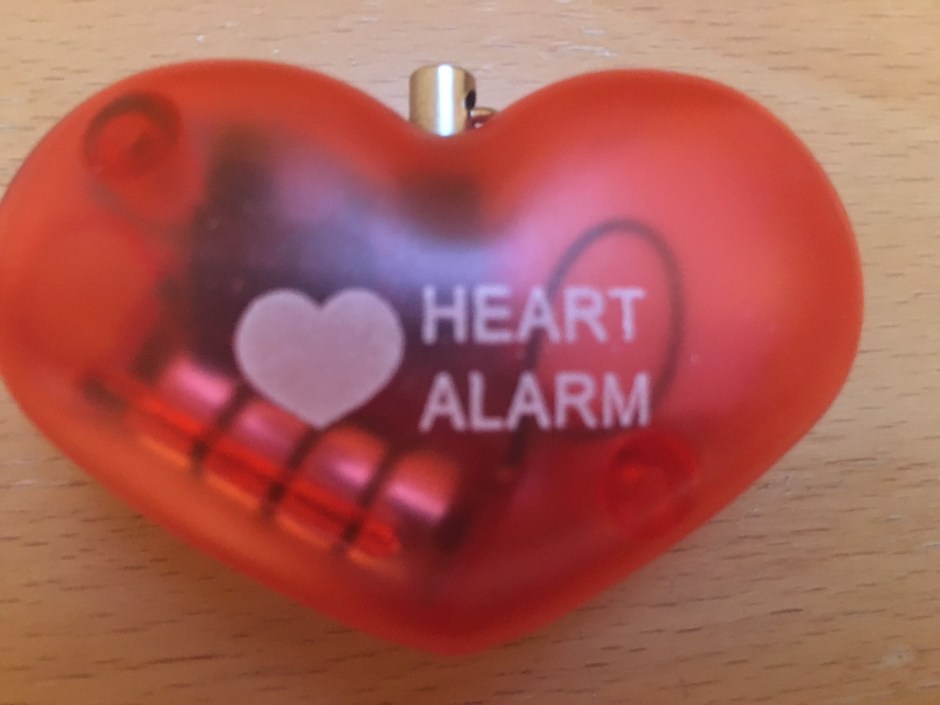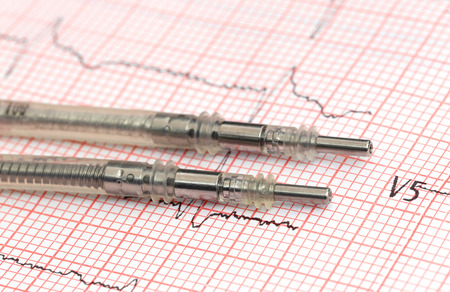
Could St. Jude ICDs be a Target for Hackers? FDA Issues Safety Advisory

The U.S. Food and Drug Administration today issued a safety advisory regarding St. Jude Medical implantable cardiac devices used in conjunction with St. Jude’s proprietary Merlin @home Transmitter.

According to the advisory, these devices could potentially be vulnerable to hacking. However, only a highly skilled hacker would be sophisticated enough to exploit the vulnerability.  Such unwarranted interference could conceivably cause premature battery depletion or unnecessary shocks.

A software patch has been developed for the Merlin @home monitor designed to address the issue and to reduce the risk of hacking.  The update is now available and will be applied automatically to the Merlin monitor.

***Patients only need to make sure their Merlin@home Transmitter remains plugged in and connected in order to receive the software patch.***

Short-selling firm Muddy Waters first went public with this information in August, believing that it might cause a pending $25 billion acquisition of St. Jude Medical by Abbott Laboratories to fall apart. However, the deal closed last week despite the issue.

See also:

This article on Medscape

This article in the Minneapolis Star Tribune.

This article on Huffington Post.

This article on CNBC.

One Size Does NOT Fit All: Treatments Differ by Stage in HCM

There are distinct stages of HCM and treatments will vary according to the stage. Therefore, it is important, according to a recent article in the Netherlands Heart Journal, for patients to seek treatment from teams experienced in the the treatment of HCM.  These professionals are able to recognize transitions in the course of the disease as they occur, and then implement necessary changes in treatment.

In this thorough overview of HCM and its treatment, Dr. Iacopo Olivotto and his colleagues in the Netherlands observe that HCM is seen infrequently by community cardiologists (as compared to more common heart conditions like coronary artery disease). Hence, one of the major difficulties in HCM practice has been identification of patients at highest risk.

Continue reading “One Size Does NOT Fit All: Treatments Differ by Stage in HCM”

MyoKardia HCM Drug Has Success in Cats

MyoKardia’s experimental drug MYK-461, currently in Stage 2 trials for humans, has now been shown to eliminate left ventricular obstruction in five cats with HCM. It has already been shown to inhibit traits of HCM in mice.

Addressing these findings, Associate Professor Joshua Stern, chief of the Cardiology Service at the University of California, Davis, veterinary hospital, stated:

“There has been little to no progress in advancing the treatment of HCM in humans or animals for many years,” Stern said. “This study brings new hope for cats and people.

Based on these positive results, U.C.Davis is hoping to conduct a clinical trial of MYK-461 to determine whether it could become the standard of care for cats with HCM.

The full text of the article published in Plos One can be found here.

Computer Algorithms Used to Diagnose HCM

A study published yesterday in the Journal of the American College of Cardiology demonstrated the usefulness of computer algorithms in distinguishing hearts with HCM from athlete’s hearts on echocardiogram.  The computer algorithms were able to automatically classify the echocardiographic images by distinguishing between changes seen in hypertrophic cardiomyopathy  and changes seen in athletes’ hearts due to athletic conditioning.

Dr. Partho P. Sengupta, who authored the study, said that this technology may prove to be a useful tool in recognizing and diagnosing HCM for those who lack the experience to distinguish these conditions on echocardiogram.


Duchess Kate’s Sister, Pippa, Supports British HCM Charity

Pippa Middleton, who came to the public’s attention during the wedding of her sister Katherine to Prince William, has recently dedicated her efforts toward raising money for HCM genetic testing and research.  Middleton’s efforts are in honor of her late friend Miles Frost, who was lost to sudden cardiac arrest due to HCM in 2015. Frost’s father, British journalist and media personality David Frost, died from HCM just two years earlier in 2013, but this information was never communicated to the family.

The Miles Frost Fund, a partnership with the British Heart Foundation , helps families who have lost a member to a sudden death obtain genetic testing in order to learn if other family members are similarly affected. The Frost Fund also funds research by U.K.researchers working towards finding a cure for HCM.

Parent Heart Watch Featured on TODAY

The work of Parent Heart Watch – an organization formed by parents of children who died due to sudden cardiac arrest -was featured on the Today show this week.

Parent Heart Watch works tirelessly so that AEDs are available in schools and on playing fields around the U.S. to ensure that children will not fall victim to SCA.

Great work PHW!

Exercise Restrictions Distressing for HCM Patients

A recent study by Stanford’s HCM Center found that HCM patients whose exercise options have been limited  by the disease may find it difficult to adapt to their newly restrictive lifestyle.  The researchers found that it was very important for patients to fully understood their restrictions and limitations.

Interacting with other HCM patients in the greater HCM community provided an effective way to obtain social support and information which supplemented that obtained from health care providers.

Comprehensive Overview of Worldwide Guidelines for Assessment and Treatment of HCM

If you are looking for a lengthy, thorough and analytical summary of the current guidelines worldwide for the assessment and treatment of HCM, then this article is a must.  Nature, the International Weekly Journal of Science, has put together a comprehensive article summarizing and synthesizing all of this information.  Just make sure you have some time to read and digest. This is not for those who like to get their soundbites on Twitter!


St. Jude Medical ICD Recall

St. Jude Medical announced today that as many as 400,000  of its Fortify, Fortify Assura, Quadra Assura, Unify, Unify Assura and Unify Quadra implantable cardiac defibrillator (ICD) and cardiac resynchronization therapy defibrillator (CRT-D) devices manufactured prior to May 23, 2015 are subject to a recall notice due to a risk of premature battery depletion which may render the device unable to deliver a life saving shock.

According to the FDA, the patients most at risk are those who require lifesaving shocks and those who are pacemaker dependent.

The problem has so far resulted in two deaths.

Patients with these devices should contact their physicians for advice about how to proceed, and should seek immediate medical attention if they hear a low-battery alert from their Merlin monitoring device. Continue reading “St. Jude Medical ICD Recall”

Abandoned Leads Harder to Extract

According to a recent study published in JACC: Clinical Electrophysiology, previously abandoned pacemaker and implantable defibrillator leads which have been capped off and left behind following replacement were harder to extract later.  These abandoned leads also made it more difficult to treat device infections.

When interviewed about the significance of these study results, several physicians knowledgeable in the field further emphasized that lead removal requires special skill and equipment not typical for the average physician who implants cardiac devices.  Hence, patients facing a potential lead extraction should consider their options carefully and seek care from a specialist in lead extraction.