Can Fitness Tracker Biometrics Spot HOCM?

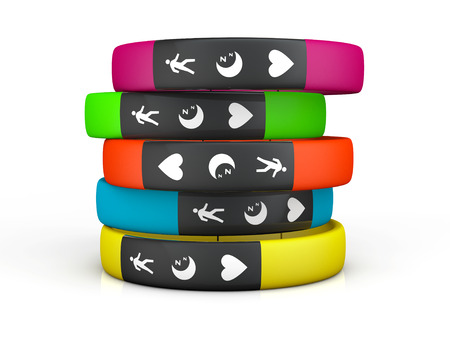
MyoKardia, a San Francisco biotech company currently in clinical trials on a HCM drug called Mavacamten, has come up with a way to spot HOCM simply by using a wristband fitness monitor. The wristband works through the use of optical biosensors which monitor arterial pulse waves.  

During MyoKardia’s trials, the bracelet biosensors were used on HOCM patients and non-affected controls.  The algorithm was able to distinguish HOCM patients from unaffected individuals more than 95% of the time, suggesting that a non-invasive way to screen for HOCM may not be too far in the future.

The linked article at Medgadget contains an interview with MyoKardia’s Dr. Robert McDowell, MyoKardia’s Chief Scientific Officer, and Dr. Eric Green, MyoKardia’s Senior Director of Translational Research with more on the happenings at MyoKardia.


Australian Summary of Standards for HCM Diagnosis and Management

A summary of current standards for the proper diagnosis and management of patients with hypertrophic cardiomyopathy was recently published by Australian HCM doctor Chris Semsarian in the journal Heart, Lung and Circulation.

Newest HCM Research Focuses on Exercise

Two articles published this week highlight how attitudes relating to exercise and HCM have changed in recent years.  Older recommendations that HCM patients should refrain from exercise appear to be outdated.

The first article, an editorial published in Circulation by Drs. Sara Saberi and Sharlene Day from the University of Michigan’s HCM Center, reviews the statistics relating to sudden death of athletes and questions the long held notion that participation in vigorous activity or competitive sports is dangerous in HCM.  This editorial also points out that moderate exercise is the only non-surgical intervention proven to increase exercise capacity in patients with HCM.

See this HCMBeat interview with Drs. Saberi and Day for more details about their groundbreaking study.

A second article from researchers in Australia used the number of a patient’s steps per day as an indicator of HCM disease severity and the patient’s functional limitations.

It seems that the time has come for HCM patients to get up off their couches and get moving!

Are HCM Kids With MYH7 Gene at Increased Risk?

A recent Canadian study found that children with HCM who carry a single mutation in the MYH7 gene or who have multiple HCM-causative genetic mutations are at increased risk of major adverse cardiac events when compared to children who carry a single mutation in another gene.

Of the 98 gene positive children in this study, those with a MYH7 mutation or those with multiple mutations were more likely to need a myectomy or an ICD or to experience a sudden cardiac arrest or a heart transplant when compared to children with other HCM causative mutations.

The article also suggests that current screening protocols which recommend clinical and genetic screening for HCM beginning at age 12 may be insufficient.

ESC Risk Assessment Tool Comes Up Short in Study

A recent study published in the American Journal of Cardiology found that the standards propounded by the American College of Cardiology Foundation with the American Heart Association (ACC/AHA) were superior in predicting which patients would benefit from an implantable cardiac defibrillator (ICD) compared to the calculator set forth by the European Society of Cardiology (ESC).  According to the study, the use of the ESC tool will result in more high-risk patients going unprotected against sudden death.

Specifically, the study found that out of a group of 288 HCM patients, 14 who experienced aborted sudden cardiac arrest (or 43%) would not have qualified for an ICD under the ESC risk model compared to 7% of patients under the ACC/AHA guidelines.

The ACC/AHA guidelines are:

ICD Guidelines rev.

A companion editorial by Dr. Andreas S. Barth pointed out the shortcomings of both models, and reaffirmed the necessity for shared decision making between physicians and patients.  Dr. Barth also expressed hope that a more accurate predictive model will evolve, though he acknowledged the impossibility of designing a model which could predict future events with certainty.


New Treatment for Arrhythmias

As reported in this New York Times article, radiation has been used as a successful treatment in five patients with ventricular arrhythmias who had previously failed standard treatment using catheter radiofrequency ablation.  The complete study was published last week in the New England Journal of Medicine.

Because long term effects of radiation to the heart are unknown, this method is still quite experimental and could potentially cause long term side effects such as lung and heart damage.  Science Daily reported that the researchers have performed the procedure on 23 patients to date, and are currently enrolling patients in a clinical trial.

Lifestyle Influences HCM

According to this recent article published in the Journal of the American Heart Association, lifestyle choices can influence the development and/or progression of HCM.

In particular, the authors made the following recommendations:

  •  Exercise:  Recreational exercise should be encouraged in HCM patients.
    • This recommendation was largely based on the findings of the recent RESET-HCM study which found that moderate exercise, specifically tailored to each individual patient’s capacity, was beneficial to the patient’s general health and well being.  **For an in-depth look at the RESET-HCM study, check out this recent HCMBeat interview with the authors of the study, Drs. Sara Saberi and Sharlene Day.
  • Eating and Drinking: 
    • Patients should avoid large meals and should not exercise immediately after eating.  
    • Care should be taken to avoid becoming dehydrated.
    • Alcohol should only be consumed in moderation.
  • Healthy weight should be maintained.
  • Hypertension should be treated aggressively, though treatment may be challenging, especially in obstructive HCM.
  • Obstructive Sleep Apnea, which may exist in as many as 70% of HCM patients, should be treated to minimize potential for arrhythmia and to improve blood flow.

Exercise Testing Important for HCM Patients

According to a recent study by doctors at Tufts HCM Center in collaboration with colleagues in Italy, exercise testing is an invaluable tool in the assessment of hypertrophic cardiomyopathy patients.

In particular, two types of exercise testing are most valuable for HCM patients:

  • Exercise Echocardiogram:  These tests are valuable in determining whether a patient has obstruction.  It provides a physiological way to measure whether or not a patient has an obstructed left ventricular outflow tract and hence, may potentially be in need of an invasive procedure to treat the obstruction.  According to the article, approximately 1/3 of HCM patients have latent obstruction which may only be seen during or after exercise.  This obstruction is not always apparent from their resting echocardiogram.

and

  • Cardiopulmonary Exercise Testing:  These tests help determine functional capacity and provide a quantifiable indicator of heart failure symptoms.  This test  can identify patients in need of more aggressive treatment options, or who are potentially in need of transplant.  A particularly valuable piece of data from this test is the “VO2 max” score, which is a measure of the maximum rate of oxygen consumption during exercise which reflects the cardiorespiratory fitness level of a person.

*Editor’s note – Exercise testing was particularly informative and important in my own HCM treatment.  It was only after my doctors performed an exercise echo that the extent of my obstruction became apparent.  The symptoms I had been suffering appeared to be out of proportion to what was visualized on my resting echo.  The exercise echo helped my doctors understand the cause of my symptoms which made the next step, in my case a myectomy, much clearer.

You can read my full story here .


Risk of Cardiac Arrest Low During Sex

According to research presented this week at the American Heart Association’s Scientific Sessions, the risk of dying from sudden cardiac arrest during or within 1 hour of sex is less than 1%.

The study, published by Dr. Sumeet Chugh of Cedars-Sinai Hospital in Los Angeles, looked at data collected in the Oregon Sudden Unexpected Death Study (Oregon SUDS) database between 2002 and 2015.

Dr. Chugh emphasized that survival was higher in the group of patients who received CPR, re-emphasizing the importance of teaching CPR in the general population.

For more details on this study, see these stories:

Newsweek

NBC News

Minn Post


Greater Certainty in Genetic Testing Results at HCM Specialty Centers

A recent study published by members of the SHaRe Cardiomyopathy Registry found that genetic test results for HCM are more definitive and helpful to patients when testing has been carried out at a high volume HCM center – especially a center that shares genetic data with other HCM centers. 

Continue reading “Greater Certainty in Genetic Testing Results at HCM Specialty Centers”