Duchess Kate’s Sister, Pippa, Supports British HCM Charity

Pippa Middleton, who came to the public’s attention during the wedding of her sister Katherine to Prince William, has recently dedicated her efforts toward raising money for HCM genetic testing and research.  Middleton’s efforts are in honor of her late friend Miles Frost, who was lost to sudden cardiac arrest due to HCM in 2015. Frost’s father, British journalist and media personality David Frost, died from HCM just two years earlier in 2013, but this information was never communicated to the family.

The Miles Frost Fund, a partnership with the British Heart Foundation , helps families who have lost a member to a sudden death obtain genetic testing in order to learn if other family members are similarly affected. The Frost Fund also funds research by U.K.researchers working towards finding a cure for HCM.

Parent Heart Watch Featured on TODAY

The work of Parent Heart Watch – an organization formed by parents of children who died due to sudden cardiac arrest -was featured on the Today show this week.

Parent Heart Watch works tirelessly so that AEDs are available in schools and on playing fields around the U.S. to ensure that children will not fall victim to SCA.

Great work PHW!

Yes We Scan! ICDs and MRIs

Why MRI is Important:

Magnetic Resonance Imaging, or MRI, is one of the most important tools of modern medicine.  MRIs can be used to evaluate almost every kind of medical issue, from brain tumors to twisted ankles.  They provide clear images, and in some instances, also provide superior visualization.  Because they do not expose the imaging subject to radiation, they are generally preferred over CT scans, even when the two scans would reveal the same information.

MRI in HCM:

In the last several years, MRI has also become an important tool in the evaluation of hypertrophic cardiomyopathy (HCM).  The images resulting from MRI have proven superior in visualizing the size and structure of the heart and, when used with a contrast agent, MRIs are able to show the extent of scarring in the HCM heart.

MRI Hasn’t Been an Option for Many of Us:

MRI has been unavailable to those of us who have an implantable defibrillator or ICD to in order to protect us from sudden cardiac arrest.  Until recently, having an ICD was an absolute contraindication to MRI.  Newer MRI-safe ICD systems have been in use for the last few years, but that still leaves in place the contraindication for those of us who have older ICD units in place.  That problem is that older lead systems that were implanted along with old, non-MR compatible generators may be incompatible with the newer MR compatible technology, and it may not be possible to simply hook up these old leads to a new MRI compatible generator.  And, it is not as easy as you might think to extract old leads.  Scar tissue grows around these leads, making their removal an intricate and dangerous procedure that is best done only in carefully controlled circumstances by highly specialized physicians. Continue reading “Yes We Scan! ICDs and MRIs”

Exercise Restrictions Distressing for HCM Patients

A recent study by Stanford’s HCM Center found that HCM patients whose exercise options have been limited  by the disease may find it difficult to adapt to their newly restrictive lifestyle.  The researchers found that it was very important for patients to fully understood their restrictions and limitations.

Interacting with other HCM patients in the greater HCM community provided an effective way to obtain social support and information which supplemented that obtained from health care providers.

Comprehensive Overview of Worldwide Guidelines for Assessment and Treatment of HCM

If you are looking for a lengthy, thorough and analytical summary of the current guidelines worldwide for the assessment and treatment of HCM, then this article is a must.  Nature, the International Weekly Journal of Science, has put together a comprehensive article summarizing and synthesizing all of this information.  Just make sure you have some time to read and digest. This is not for those who like to get their soundbites on Twitter!


St. Jude Medical ICD Recall

St. Jude Medical announced today that as many as 400,000  of its Fortify, Fortify Assura, Quadra Assura, Unify, Unify Assura and Unify Quadra implantable cardiac defibrillator (ICD) and cardiac resynchronization therapy defibrillator (CRT-D) devices manufactured prior to May 23, 2015 are subject to a recall notice due to a risk of premature battery depletion which may render the device unable to deliver a life saving shock.

According to the FDA, the patients most at risk are those who require lifesaving shocks and those who are pacemaker dependent.

The problem has so far resulted in two deaths.

Patients with these devices should contact their physicians for advice about how to proceed, and should seek immediate medical attention if they hear a low-battery alert from their Merlin monitoring device. Continue reading “St. Jude Medical ICD Recall”

Abandoned Leads Harder to Extract

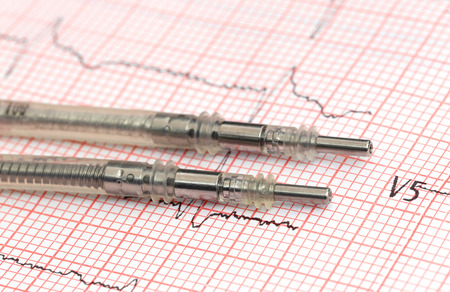
According to a recent study published in JACC: Clinical Electrophysiology, previously abandoned pacemaker and implantable defibrillator leads which have been capped off and left behind following replacement were harder to extract later.  These abandoned leads also made it more difficult to treat device infections.

When interviewed about the significance of these study results, several physicians knowledgeable in the field further emphasized that lead removal requires special skill and equipment not typical for the average physician who implants cardiac devices.  Hence, patients facing a potential lead extraction should consider their options carefully and seek care from a specialist in lead extraction.


Racial Differences in HCM

A recent study of U.K. HCM patients compared a racially mixed sample of 425 patients, including 163 black patients and 262 Caucasians.  The study concluded that while asymmetric septal hypertrophy was the predominant pattern in both ethnic groups, black patients had more instances of apical and concentric hypertrophy, which could, in turn, be responsible for delayed diagnosis of these patients.

Catheter ablation useful for AFib in HCM

A recent article published in Heart looked at the safety and effectiveness of catheter ablation for the treatment of Atrial Fibrillation in patients with HCM by performing a systematic review of prior publications on the subject.

The researchers concluded that even though the success rate for HCM patients was approximately half that of patients who suffered from AFib but did not have HCM, catheter ablation is still an effective treatment for HCM patients;  especially for those HCM patients who suffer from paroxysmal AFib and who have smaller atria.

Lindsay Davis: Using Her Big Heart to Help Others With HCM

This article, published in this week’s Women’s Health magazine, features the former ballerina and beauty queen turned vocal patient activist. These days, Lindsay has focused her efforts on saving lives from sudden cardiac arrest.  Lindsay’s efforts in the state of Ohio have resulted in proposed legislation to identify student athletes at risk of sudden cardiac arrest, while her partnership with the American Heart Association is steadily making CPR and AED training a graduation requirement in high schools across the nation.

Watch for more life-saving advocacy from Lindsay in the future.  She is clearly much more than another pretty face!

Updated to include a video of Lindsay discussing her implantation with a S-ICD device.