Sudden Cardiac Death in Young Athletes

Editor’s Note:  This post originally appeared on the blog of Dr. Howard J. Luks. Dr. Luks  wrote this blog entry in collaboration with HCM expert Dr. Srihari S. Naidu of New York’s Westchester Medical Center. You can find the original post here.  You can find both Dr. Luks and Dr. Naidu on Twitter @hjluks and @SrihariNaiduMD.

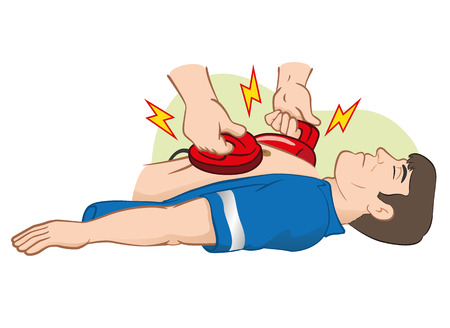
Sudden cardiac death in young athletes continues with alarming frequency.  The most common cause of sudden death in the young athlete is hypertrophic cardiomyopathy or HCM.  Simply put, HCM means the heart muscle is bigger.  Many of us believe that bigger muscle means stronger muscle.  That is not always the case with the heart.  The heart is a mechanical pump with a complex arrangement of chambers which store the blood. How that pump works is controlled by a very complex electrical system.  Hypertrophic cardiomyopathy can interfere with one or both of these critical functions of the heart and lead to sudden cardiac death.

Continue reading “Sudden Cardiac Death in Young Athletes”

HIGHLIGHTS FROM THE INTERNATIONAL HCM SUMMIT, PART IV

Editor’s Note:  This is the 4th of 4 blog entries which summarizes the presentations given at the recent International HCM Summit VI in Boston.  The presenter and their hospital affiliation are noted below, along with the topic of their presentation.  When possible, you may access the presenters’ slides via hyperlink by clicking on the name. (Note that not all presenters made their slides available).

To see Part I of this series of highlights from the HCM Summit VI, click here, to see Part II of this series click here, and to see part III of this series. click here.

Continue reading “HIGHLIGHTS FROM THE INTERNATIONAL HCM SUMMIT, PART IV”

HIGHLIGHTS FROM THE INTERNATIONAL HCM SUMMIT VI, PART III

**Because so much HCM information was presented at the Summit, this is the third of multiple blog entries.  Stay tuned to HCMBeat for more highlights from the HCM Summit.  To see Part I of this series of highlights from the HCM Summit VI, click here and to see Part II of this series click here.**

The symposium was organized by long time HCM expert Dr. Barry Maron and his son, Dr. Martin Maron.  Both Marons are now affiliated with Tufts Medical Center’s Hypertrophic Cardiomyopathy Center.

What follows are summaries from selected talks presented at the meeting.  The presenter and their hospital affiliation are noted below, along with the topic of their presentation.  When possible, you may access the presenters’ slides via hyperlink by clicking on the name. (Note that not all presenters made their slides available).

Continue reading “HIGHLIGHTS FROM THE INTERNATIONAL HCM SUMMIT VI, PART III”

Exercise Testing Important for HCM Patients

According to a recent study by doctors at Tufts HCM Center in collaboration with colleagues in Italy, exercise testing is an invaluable tool in the assessment of hypertrophic cardiomyopathy patients.

In particular, two types of exercise testing are most valuable for HCM patients:

  • Exercise Echocardiogram:  These tests are valuable in determining whether a patient has obstruction.  It provides a physiological way to measure whether or not a patient has an obstructed left ventricular outflow tract and hence, may potentially be in need of an invasive procedure to treat the obstruction.  According to the article, approximately 1/3 of HCM patients have latent obstruction which may only be seen during or after exercise.  This obstruction is not always apparent from their resting echocardiogram.

and

  • Cardiopulmonary Exercise Testing:  These tests help determine functional capacity and provide a quantifiable indicator of heart failure symptoms.  This test  can identify patients in need of more aggressive treatment options, or who are potentially in need of transplant.  A particularly valuable piece of data from this test is the “VO2 max” score, which is a measure of the maximum rate of oxygen consumption during exercise which reflects the cardiorespiratory fitness level of a person.

*Editor’s note – Exercise testing was particularly informative and important in my own HCM treatment.  It was only after my doctors performed an exercise echo that the extent of my obstruction became apparent.  The symptoms I had been suffering appeared to be out of proportion to what was visualized on my resting echo.  The exercise echo helped my doctors understand the cause of my symptoms which made the next step, in my case a myectomy, much clearer.

You can read my full story here .


HIGHLIGHTS FROM THE INTERNATIONAL HCM SUMMIT VI, PART I

**Because so much HCM information was presented at the Summit, this will be the first of multiple blog entries.  Stay tuned to HCMBeat for more highlights from the HCM Summit.  You will find Part II of this series by clicking here.**

The 6th International HCM Summit was held October 27, 28 and 29th in Boston, Massachusetts.  This symposium brings together HCM professionals from around the world who are there to learn about and discuss the latest developments in the treatment of HCM.

The symposium was organized by long time HCM expert Dr. Barry Maron and his son, Dr. Martin Maron.  Both Marons are now affiliated with Tufts Medical Center’s Hypertrophic Cardiomyopathy Center.

What follows are summaries from selected talks presented at the meeting.  The presenter and their hospital affiliation are noted below, along with the topic of their presentation.  When possible, you may access the presenters’ slides via hyperlink by clicking on the name. (Note that not all presenters made their slides available).

Continue reading “HIGHLIGHTS FROM THE INTERNATIONAL HCM SUMMIT VI, PART I”

More is Needed for Women With HCM

A recent study published in the European Heart Journal by doctors from the Mayo Clinic showed that women with hypertrophic cardiomyopathy (HCM) have a statistically reduced rate of survival as compared to men with HCM.

Continue reading “More is Needed for Women With HCM”

A Risk Calculator for Sudden Death -Results of HCM-EVIDENCE Study

The HCM Risk–SCD Score

In 2014, the European Society of Cardiology (ESC) introduced a numerical predictor (the “HCM Risk–SCD score”) to assist physicians in identifying those patients at highest risk for sudden cardiac death who would benefit from the implantation of a prophylactic implantable cardioverter-defibrillator.

Using an algorithm generated by the answers to a series of questions, the tool estimates the 5-year risk of sudden cardiac arrest for any particular patient.  You can find the tool online here.

Continue reading “A Risk Calculator for Sudden Death -Results of HCM-EVIDENCE Study”

Multiple Mutations in HCM

A recent paper by researchers in Australia, published this week in Circulation: Cardiovascular Genetics, found more than one rare HCM gene in 4% of patients in a 758 patient sample group.

The researchers found that those patients with multiple rare HCM genes tended to present with HCM at a younger age, were more likely to experience cardiac arrest or death from other causes, and were more likely to require a heart transplant.

In general, few patients have multiples of mutations commonly associated with HCM.  See this Canadian study from April of this year which found that multiple mutations were less prevalent and harmful than previously thought.

Encouraging Results for MyoKardia HCM Drug

MyoKardia’s stock prices jumped today after their recent Stage II trial of the experimental drug mavacamten (formally known as MYK-461)  demonstrated a statistically significant reduction to left ventricular outflow tract gradients as well as improvement to aerobic capacity in patients with obstructive hypertrophic cardiomyopathy.  

Of the 10 patients who completed the study, 8 saw their gradient reduced to normal levels after 12 weeks on the drug.  The study also showed improvements in both peak oxygen consumption (peak VO2) and New York Heart Association classifications:  7 patients moved up one NYHA class while 2 patients improved by two classes.

The drug seemed to have mild to moderate side effects, though one patient was forced to drop out of the trial due to a recurrence of atrial fibrillation which necessitated discontinuation of mavacamten and a return to anti-arrythmic drugs which had been discontinued due to participation in the trial.

MyoKardia hopes to enroll between 200 and 250 patients in its next phase trial (Explorer HCM) which it plans to begin before the end of 2017.

MyoKardia also plans a clinical trial of mavacamten in non-obstructive HCM patients in the second half of 2017.

For more information on MyoKardia and  recent drugs being developed for HCM read these past blog entries:

MyoKardia HCM Drug Has Success in Cats

End of the Road for Eleclazine and Liberty HCM Study

HCM Drug Trial Advances to Next Round

Drug for Non-Obstructive HCM Moves Along

CRISPR Eliminates HCM Gene !

Scientists, in a follow up to three earlier, less successful, Chinese experiments, have for the first time used a recently developed gene editing process known as “CRISPR” to remove a genetic defect from a human embryo.  The specific defect that the scientists targeted was a mutation in MYBPC3, a common genetic cause of hypertrophic cardiomyopathy (HCM).

What Happened in the Study?

The study authors consisted of a multi-national team of geneticists, cardiologists, fertility experts and embryologists.  Led by Dr. Shoukhrat Mitalipov of Oregon Health Sciences University, in collaboration with researchers at the Salk Institute in La Jolla, CA, China and South Korea, the researchers were able to largely remove the HCM gene MYBPC3 from very early stage human embryos.

Their research involved using eggs from 12 healthy female donors, and sperm from a male HCM patient with the MYBPC3 gene.  When gene-editing components were introduced to the egg along with the sperm, prior to fertilization of the egg, approximately 3/4 of the embryos repaired themselves using the DNA blueprint provided by the normal, non-mutated copy of the gene from the unaffected female.  This was somewhat surprising to researchers, who had theorized that cells would replicate using a blueprint from the repaired paternal gene – not the healthy gene of the mother.

Ultimately, genes were corrected in 42 of 58 embryos, constituting 72.4% of the total, a higher proportion than expected, and far more than any correction shown in previous experiments.

Implications for the Future

This technique is still far from general usage and will require further study and refinement.  And, currently it is not legal in the United States since the Food & Drug Administration currently prohibits medical gene editing which would impact future generations.

However, it would be possible for this technique to be used alongside current technology to assist families with genetic diseases like HCM.  If used in conjunction with pre-implantation genetic testing and in-vitro fertilization (PGD), the technique could repair the large proportion of embryos (roughly 50%) which must be discarded due to genetic defectiveness.

While there are critics who say that this technology will lead to “designer babies” and that it creates troubling ethical issues for society, most HCM patients believe that it provides a ray of hope, so that hopefully one day, in the not-too-distant-future, our children and grandchildren will be free of the affliction that has permeated our lives, as well as the lives of our siblings, our parents, our aunts and uncles, our cousins, our grandparents, and our great-grandparents.

Story Links:

As this story was reported by all major news sources, links to many of the articles can be found below.

Nature

The Atlantic

New York Times

Washington Post.

NPR

LA Times

Los Angeles Times – Q&A video clip with lead study author Shourkhrat Mitalipov

The Guardian

USA Today

MIT Technology Review

Gizmodo

Boston Herald

LA Times article regarding ethics -response to first article

NOTE THAT APPROXIMATELY A MONTH AFTER THE PUBLICATION OF THIS ARTICLE, THE RESULTS HAVE BEEN CALLED INTO QUESTION BY OTHER SCIENTISTS.

See this article in MIT Technology Review, this article in Science Magazinethis article in Nature, and this article in The Scientist, all of which cite this article in BioRxiv which poses alternative theories for the results claimed by the original paper.